
Endangered Feelings 🐘💙💫
Rekindling Awe in a Disenchanted World

“The most beautiful thing we can experience is the mysterious. It is the source of all true art and science. He to whom this emotion is a stranger, who can no longer pause to wonder and stand rapt in awe, is as good as dead: his eyes are closed.” - Albert Einstein
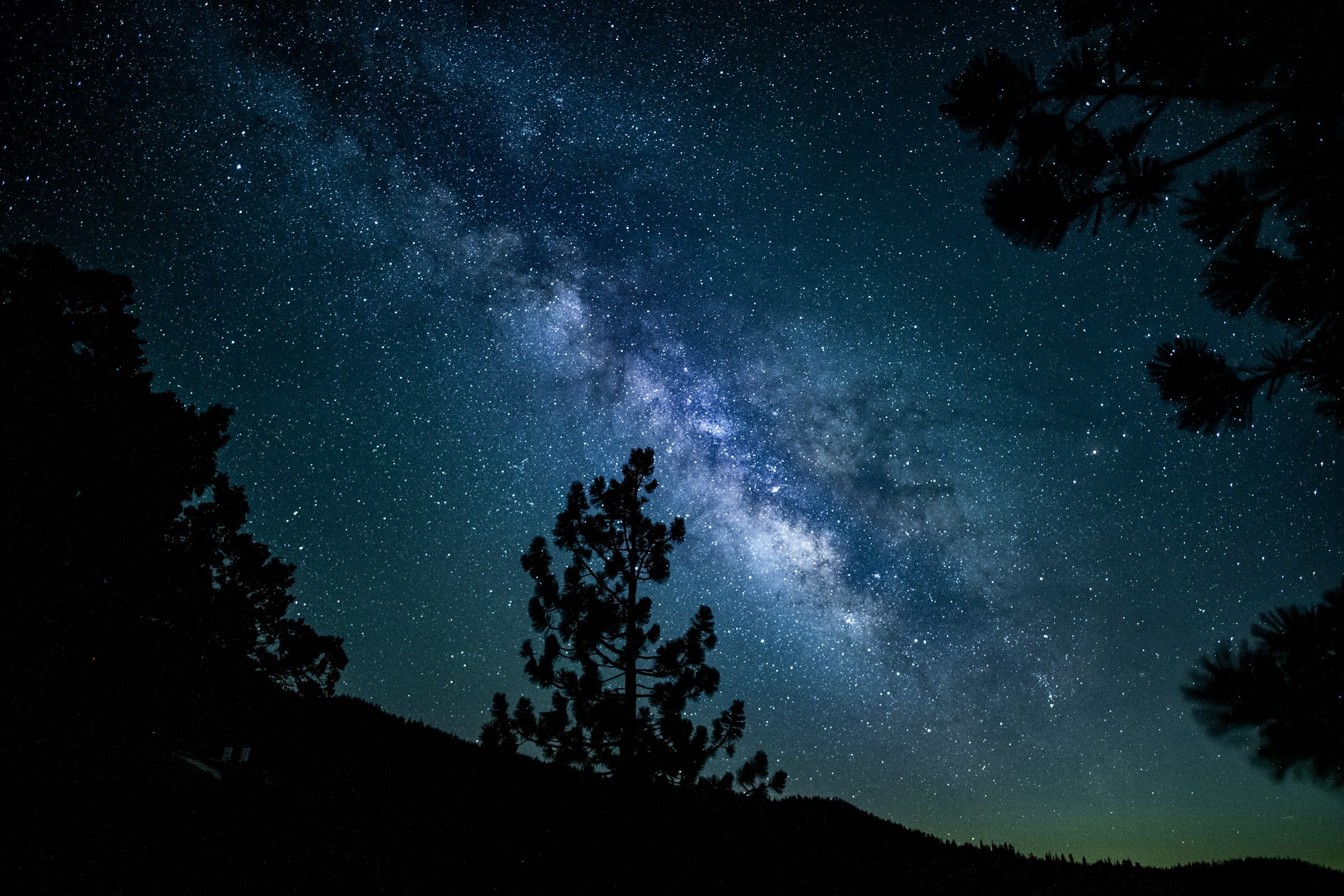
Sublime Stardust
I imagine Einstein raising an eyebrow from across time, baffled by how we went from stargazing to screen gazing. There’s something both funny and tragic about the fact that we carry the sum of human knowledge in our pockets, yet the most viewed YouTube video of all time is one of animated baby sharks singing doo doo doo doo.[1]
Despite living in an era of hyperreal visuals and on-demand everything, we’ve become remarkably underwhelmed. Our senses have been dulled by the very technologies designed to stimulate them, eroding the curiosity and wonder that Einstein saw as essential to living a fulfilled life.
There are things like food and water that we simply can’t survive without but then there are things like awe, beauty and connection that enrich our lives and make it feel worth the while. Most of us have surely felt awe, that expansive feeling that both humbles and uplifts, [2] reminding us we’re part of something greater than ourselves.
It’s an emotion that has the power to ignite our imagination, stir compassion, inspire and even heal us. Nature is an obvious source, from striking landscapes and powerful storms to the intricate geometry of a beehive or the miracle of birth. But awe can slip into our lives more subtly too, via a moving piece of music, the taste of an heirloom tomato grown with care or an unexpected act of kindness.
Moments of awe tend to stay in our memory, regardless of how much time has passed. Yet, this profound emotion is becoming harder to come by.
Uncomfortably Numb
Modern life has gradually pulled many of us away from nature’s rhythms and the deep connections that once grounded us. Even those who cherish the natural world can feel this dulling effect creep in at times.
For most of human history, we looked up at the stars and felt a sense of cosmic belonging. But today, light pollution has made that impossible across much of the globe. The Milky Way, once a universal canvas of stars and stories, has faded from view and over the course of just a few generations, our gaze has shifted towards the constant pings flashing across our screens.
Overstimulated and hyperconnected, we are saturated with content designed to provoke, distract and keep us scrolling. To cope, our nervous system starts to filter out the noise - and sometimes it filters out the beauty too, blurring the line between the ordinary and extraordinary. As we become desensitized, we risk losing touch with the emotion that brings a welcome bit of zest to our lives.
I’ve always been a little awestruck by unusual animal friendships, those improbable bonds that seem to defy the rules of nature: an inseparable goat and horse; a lioness adopting a baby antelope in the wild;[3] and the camaraderie between a lion, tiger and bear. 😮 [4] Such unexpected connections are heartwarming and just amazing. But now, with so much artificially generated content flooding the cyberwaves, we don’t always know what’s real and that uncertainty is making it harder to let wonder in...
I know I described food as a mere necessity above, but nature’s kaleidoscope of flavors, textures and aromas holds a kind of marvel that’s hard to truly erase - unlike hollow AI images. 🤖 Still, the wonders of food are easy to overlook in today’s world. As we’ve grown more disconnected from the origins of what we eat, our collective reverence has faded. We no longer see the seed planted in the soil, the sun coaxing it to grow, the flower gently transforming into fruit, or the hands that tend and harvest. So much unfolds out of sight and is processed for speed, leaving little room to consider the stories behind what ends up on our plates. Yet, food offers one of our most visceral pathways back to awe. 🍋
And so do tigers…
A Wild Encounter
One awe-filled moment for me happened 25 years ago while riding a sweet elephant named Mohini.[5] I was with my father and sister in the foothills of the Himalayas and we were exploring Corbett Park, a wild nature reserve in India known for its remarkable biodiversity across varied landscapes. It was early morning; the air was cool and fresh and the forest was alive with birdsong. We were completely swept up in the raw beauty of our surroundings.
Midway through the journey, our mahut (elephant driver) stopped and quietly told us a tiger was nearby. We were riding along a path between tall grasslands and dense forests when he explained that the langur monkeys in the nearby trees had begun sounding the alarm with distinctive calls to warn other animals of the approaching predator.
We listened to the langurs and turned around to look behind us. And we saw it; the largest tiger I had ever seen emerged from the grass and darted across our path into the forest. It all happened in a flash, but those few seconds were spellbinding.
I had seen tigers in more curated environments before, but none of those experiences have stayed with me. There’s something about the unpredictability of nature that makes it so awe-inspiring. And what made the moment even more beautiful was witnessing how the langurs, high in the canopy, helped their fellow forest dwellers - a little Jungle Book-esque, but with kinder monkeys. 🙊
I don’t have any photos of the tiger. But it’s a memory, shared with my dad and sister, that has stayed with me for a quarter of a century. 🐘🍃🐅
And it turns out, awe is far more than a fleeting emotion. It can also be profoundly healing and there’s some very compelling science to prove it.
The Awe Antidote
Over the past two decades, researchers have uncovered how awe shifts us biologically, neurologically and socially in measurable ways.
When we experience this emotion, several regions of the brain become active, including areas in the prefrontal cortex and anterior cingulate cortex.[6] These regions are associated with attention, emotional regulation and self-awareness, qualities that help broaden our perspective, process complex experiences and connect with others. At the same time, awe appears to reduce activity in the brain’s default mode network, which is associated with rumination and self-referential thinking. This quieting effect interrupts the mental chatter that so often dominates our inner world, allowing us to feel more present with the world around us.[7]
Awe has the power to change our brain chemistry too. This emotional state triggers the release of dopamine, the pleasure and motivation neurotransmitter, as well as endorphins, the body’s natural mood enhancers and pain relievers. [8] These neurochemical shifts help explain why awe often lifts our mood, reduces anxiety and leaves us feeling both energized and at ease.
On a physical level, awe stimulates the vagus nerve, which helps regulate the parasympathetic nervous system, the one that kicks in after stress to help us rest and recharge. That means a lower heart rate, reduced blood pressure and a more settled, restful state. Awe may also help decrease inflammation by lowering stress-related biomarkers. Research has found that people who regularly experience awe tend to have lower levels of pro-inflammatory cytokines, proteins linked to chronic inflammation, depression and heart disease.[9]
By shifting attention away from the self and toward something larger, awe evokes the small self.[10] In this state, people often feel a deeper sense of connection to others, along with greater humility and a stronger inclination toward prosocial behaviors like generosity, empathy and cooperation.[11]
Awestruck
We often associate awe with the grand and rare - seeing the Northern Lights, swimming with whales or watching the sunrise from a mountain peak. So, it might then seem like awe is mainly for the privileged. But Berkley psychologist Dacher Keltner has found wealth isn’t a factor in experiencing this emotion. And the most common source of it is moral beauty. He found that when rooted in pure intentions, the greatest provenance is the goodness of others.[12] This insight reminds us that simple, heartfelt acts are among life’s richest gifts, and the awe they inspire can nourish both our wellbeing and that of those we touch.
Acts of kindness between animals can be pretty awe-inspiring too. One story that’s stayed with me is of the goat and horse I mentioned earlier. When Charlie the horse lost his eyesight and his owners were thinking of putting him down, Jack the goat butted in and refused to leave Charlie’s side. He became Charlie’s guide on the Oklahoma ranch where they lived.[13] Their friendship shows that profound connection and compassion can transcend species and inspire awe in its purest form.
Technology allows us to witness and share moments across great distances, connecting us to wild landscapes, diverse cultures and remarkable stories like that of Charlie and Jack. But it also changes our relationship to nature, one of the most powerful and reliable sources of awe. If we want the fuller, healthier, more connected lives that science shows us awe can offer, real-world, sensory experiences still matter. And few things awaken our senses quite like food.
I’ve always been amazed by the variety of ingredients nature offers us.[14] And by the alchemy of cooking and how those elements come together to create a meal so much greater than the sum of their parts. There is something very grounding about the way food engages our senses, like the citrusy zing of lemon zest, tomato paste deepening everything it touches, the delicate notes of saffron adding warmth and color, a soup that beautifully captures the season or the way a bit of butter makes everything taste better. 😋 These simple, sensory moments are a doorway to experiencing awe and finding wonder in the ordinary. While writing this piece, I realized the link between mindfulness and awe, and how mindful I actually am when it comes to food! Mindfulness is often thought of as a wellbeing practice, but its roots stretch back to the ancient Vedas and it’s also foundational to Buddhism. Both traditions emphasize focused attention and living in the moment, a state that awe puts us in effortlessly.
Not everyone shares my passion for food or can look up at the stars and ponder the mysteries of the Milky Way, but wonder is still within reach and ready to be discovered in our own unique ways – especially for those of us drawn to the natural world. While Einstein’s work transformed our understanding of the cosmos, he often spoke of the secrets of nature and how we’ve only just begun to grasp a tiny fraction of what’s been revealed to us. In our rush to create a tech-fueled existence, we risk losing touch with the timeless rhythms of life that have long sustained us.
Awe has a remarkable way of pulling us out of autopilot. It sparks curiosity, floods us with feel-good chemicals, fights inflammation and gently grounds us. More often than not, that grounding comes from nature and the recognition that we’re part of its endless cycle of mystery, beauty and change. This transformative emotion draws us out of ourselves, inspiring us to keep exploring nature’s mysteries, and keeping us – as Einstein might say – safely among the living. 😉
I’m building a small circle of values-aligned partners and founding sponsors to help support The Earth Dispatch. If you’re involved in food, land or regenerative systems and open to exploring a potential collaboration, please get in touch. 🌍🙏🌱
Endnotes
[1] "Baby Shark Dance" by Korean education brand Pinkfog has been viewed nearly 16 billion times since its release in June 2016. https://www.statista.com/statistics/249396/top-youtube-videos-views/
[2] While awe can sometimes involve feelings of fear or anxiety, it’s most commonly associated with positive emotions, which is the context I will be focusing on for this piece.
[3] Conservationist Saba Douglas-Hamilton’s observed a lioness at Samburu Reserve in Kenya adopt an antelope calf.
.
[4] Surviving traumatic cubhoods together, Baloo, Leo and Shere Khan were the best of friends at Noah's Ark Animal Sanctuary:
[5] My memory is pretty good but not as good as an elephant’s. 🐘 I’m 93% sure that was her name! 💙
[6] Monroy & Keltner, Awe as a Pathway to Mental and Physical Health (2022); See also Mind Theory Podcast. “The Psychology of Awe: How Wonder Changes Our Brains.” November 2024.
[7] van Elk et al., (2019) The Neural Correlates of the Awe Experience: Reduced Default Mode Network Activity During Feelings of Awe, Human Brain Mapping.
[8] Monroy et al. (2025). Awe reduces depressive symptoms and improves well-being in a randomized-controlled clinical trial. Scientific Reports, 15, Article 16453.
[9] Stellar, J. E., et al. (2015). Positive affect and markers of inflammation: Discrete positive emotions predict lower levels of inflammatory cytokines. Emotion, 15(2), 129–133.
[10] The small self describes a psychological experience where there’s diminished focus on the individual self during experiences of awe. https://lifestyle.sustainability-directory.com/term/small-self/
[11] Jiao, L. et al. (2022). Dispositional awe positively predicts prosocial tendencies: The multiple mediation effects of connectedness and empathy. International Journal of Environmental Research and Public Health, 19(24), 16605.
[12] Keltner, Dacher. “What’s the Most Common Source of Awe?” Greater Good Magazine, 24 Jan. 2023. https://greatergood.berkeley.edu/article/item/whats_the_most_common_source_of_awe
[13] Footage of Charlie and Jack. Nature: Animal Odd Couples (PBS, 2012).
[14] For anyone who shares my enthusiasm for ingredients, this is a beautiful book if you can find it: https://books.google.co.uk/books?id=2VYGQgAACAAJ&source=gbs_book_other_versions
Love this!! I will be more intentional about spending time in nature 🌳🌌
For anyone who feels like sharing, what's left you awestruck - those moments you can't forget? ✨🤍🌋 Or has tech overload numbed the magic? 🤖 I'd love to hear what resonated in this piece for you! 🤠