
Regenerative Roots 🌱 Part One
Soil and the Gut: The Mirrored Microbiomes That Sustain Life 🦠🔬🪱


“This law is true for soil, plant, animal, and man: the health of these four is one connected chain.” — Sir Albert Howard, 1940
Learning from the Land
Growing up, I saw the many merits of industrial agriculture: higher yields, fewer pests and the perks of having summer fruits all year round. My mother was part of that story. She worked as a biochemist for a global agricultural corporation, developing tools to better understand how pesticides interact with soil and insects. She devoted her education and skills to the very laudable goal of improving agricultural outcomes and was even awarded a patent for her work involving insect signaling.
But around the time I went to graduate school, I began to reflect more deeply on these scientific triumphs. Reading works that questioned this familiar narrative, I realized many technological advances often mask far more complicated realities.
And sometimes wisdom arrives wrapped in irony. In the early 20th century, botanist Sir Albert Howard went to British India with a mandate to boost crop yields using modern Western methods. But what he encountered turned that mission on its head. The crops cultivated by Indian farmers using traditional, indigenous practices were thriving and outperforming those grown under the very techniques he was sent to promote.
What began as a mission to “teach” soon became a journey of learning. While credited as the father of the organic movement, Howard himself acknowledged that his greatest teachers were the land stewards in India, whose traditional knowledge predated Western science. He studied their methods closely and saw how composting, crop diversity and ecological stewardship formed a holistic system of land care, one that nurtured the soil, supported long-term fertility and sustained the health of those who depended upon it.[1]
The Indian farmers were, in essence, cultivating living soil. They understood intuitively what science is only now beginning to catch on to: healthy soil is not inert but very much alive.
A Short-Sighted Lens
History supports this deep-rooted insight. Before British rule, India experienced relatively few famines -- around two per century. But under British administration, the number of famines soared with more than thirty major events occurring in just 120 years. These disasters were often man-made, driven by policies that forced cash-crop production, high land taxes and continued food exportation even during times of scarcity.[2]
So how did we lose touch with the biological wisdom that once guided how we grew food? Over time, a deepened faith in technology, efficiency and control became the driving force for agricultural progress. And for much of the last century, agricultural education emphasized chemistry over biology, framing farming as a system of inputs and outputs: NPK values, nutrient ratios and yield optimization. Complex ecosystems were flattened into formulas that could be graphed, measured and managed. In the process, we began to overlook the intricate relationships that sustain living soil.
Soil and the Gut: Two Microbiomes, One Principle
But nature doesn’t operate like a spreadsheet. Just as the life within soil was once overlooked, so too was the complex ecosystem within our own bodies. Emerging research is now revealing striking parallels between the health of our soil and the health of our gut. Both are teeming with microbial life. Both thrive on diversity, balance and organic nourishment. And when either is disrupted, by synthetic inputs, poor diet, or environmental degradation, the cascading effects reach far beyond the soil and gut.
The Soil Crisis: From Living Earth to Lifeless Dirt
Healthy soil is teeming with trillions of microorganisms quietly sustaining entire ecosystems. These tiny life forms cycle nutrients, keep disease in check and even help regulate the climate. In many ways, soil acts like the Earth’s digestive system, breaking down organic matter into vital nourishment that feeds plants and keeps natural cycles in balance. But this delicate dance depends on a thriving, balanced community of microbes.
Unfortunately, modern farming practices like mono-cropping, use of synthetic fertilizers and pesticides as well as aggressive tillage have thrown this balance off. What was once rich, fertile soil has become compacted, eroded and biologically depleted. This loss not only undermines ecosystems but directly affects the quality of the food we eat.
Nutrient-poor soils produce crops with lower levels of antioxidants and phytonutrients, key compounds that support our health and help prevent disease. Studies comparing produce from the 1950s to the 1990s reveal sharp declines in calcium, iron and vitamin C.[3] Researchers trace these trends back to soil depletion caused by intensive farming and synthetic inputs.[4]
When I think about these nutrient losses, I think about flavor too. I recall my late father reminiscing fondly about the food of his childhood in India: the delicious variety of mangoes, the earthy sweetness of simple vegetables like carrots – flavors that stood in sharp contrast to what was available to us in the United States. In systems like Ayurveda, food is deeply tied to health, mood and stamina. The taste and nourishment of those fruits and vegetables my dad ate growing up reflected the richness of the soil they came from and the harmony between land, food and body. (I’ll be diving deeper into these links in Part Three of Regenerative Roots 🌞)
Beyond culinary vitality, there’s a lot more at stake. Depleted soils can’t hold water effectively so they lose their natural fertility. That means less productive farms and a weaker foundation for the entire ecosystem.
Gut Health: A Microcosm of Modern Illness
The damage happening in our soils isn’t just a problem for the land. It echoes through every living system connected to it, including the tiny, bustling world inside our own bodies. Just like soil microbes keep plants and ecosystems healthy, the microbes in our guts play a huge role in our overall wellbeing. And we’re only just beginning to uncover how deeply intertwined the connection between soil and self is.
The vibrant community of around 39 trillion microorganisms[5] nestled within us help us digest food, regulate hormones and influence our immune system, mood and metabolism. But modern life hasn’t been easy on them. Our love for convenience has stripped away the complex, nutrient-rich foods our gut microbes depend on.
Processed foods, refined sugars, constant stress, environmental toxins and frequent antibiotics have all taken a toll, causing a significant drop in the diversity of microbes in Western guts with some estimates citing a 30 to 50% decline over the past century,[6] mirroring the broader loss of biodiversity in our environment.
Science is now showing us just how crucial gut diversity is to health. A lack of microbial richness is linked to a rise in digestive troubles, autoimmune diseases,[7] allergies, depression[8] and metabolic issues.[9] Take inflammatory bowel disease (IBD); people with IBD consistently have less microbial diversity than those with healthy digestion.[10] And early antibiotic use in childhood can cut gut diversity by half, raising the risk of asthma, allergies and other immune problems.[11]
Proverbial wisdom reminds us: “Health is not valued till sickness comes.” Many of us have seen loved ones face sudden health challenges, or perhaps we’ve even experienced them ourselves. Chronic illness used to feel like something that came with age, but now we’re seeing new patterns of disease onset. Cancer rates are rising in people under 50[12] and nearly 60% of adults aged 18-34 now live with at least one chronic condition.[13]
Some of this may link back to how our food is grown. Pesticide exposure has been tied to certain cancers.[14] Parkinson’s disease also shows connections to agricultural chemicals and researchers have found shifts in gut microbes tied to brain inflammation in those with the condition.[15] The soil-gut-body connection may be invisible but it’s becoming impossible to ignore.
The Soil-Gut Connection: What We Eat Shapes Who We Are
The powerful link between soil and gut health shows up most clearly on our plates. Plants grown in living, biologically rich soils contain more vitamins, minerals, antioxidants and phytonutrients than those grown in depleted dirt. Plus, they carry beneficial microbes from their environment, helping nourish and populate our own gut microbiomes.
And it’s not just plants; healthy soil supports thriving animal husbandry too. Animals raised on nutrient-rich pastures graze on plants grown in vibrant soils, which means their meat, milk and eggs carry those soil health benefits right to our plate. This interconnected cycle of soil, plants and animals was central to Howard’s vision of agriculture as a continuous circle of life.
Back in 1940, Sir Albert Howard wrote in An Agricultural Testament:
“Artificial manures lead inevitably to artificial nutrition, artificial animals, and finally to artificial men and women.”
Talk about incredible prescience! When he wrote those words 85 years ago, he couldn’t have possibly imagined just how literal they would feel in today’s world ripe with ultra-processed food, fake meat, Botox and AI-generated everything…
We almost seem to be tumbling towards an Idiocracy[16] style future where we’ll soon be watering crops with Gatorade and wondering why nothing grows. Are we too far gone? Or is there still a way back to vitality and something real?
Healing the Land, Healing Ourselves
The hopeful answer is yes, there’s a way back. 💚 Both soil and gut ecosystems are incredibly resilient. When we reintroduce biodiversity, organic matter and ecological balance, nature’s regenerative genius kicks in to repair, revive and thrive.
Farmers using regenerative practices like composting, cover cropping, diverse species rotation and animal integration are seeing amazing results:[17]
• 20-30% higher yields compared to conventional farms
• Up to 50-65% more soil microbial diversity
• 3-12x increases in soil organic matter
These methods don’t just heal the land; they grow food that’s richer in nutrients and support the microbial diversity we need for our own health. By bringing soil back to life, we’re giving ourselves a better shot at wellbeing too.
Healing isn’t just about what we add back in; it’s also about what we step away from. This idea of healing as a return to balance will carry through the rest of this series. In Regenerative Roots, Part Two, we’ll explore how common additives, like emulsifiers, may quietly be damaging our gut lining, undermining the microbial communities that protect us and how we can help this vital barrier regain its strength and protective function.
Coming Full Circle
The soil and gut aren’t just connected; they’re two expressions of the same living system. These ecosystems mirroring one another are vital, vulnerable and full of extraordinary potential to heal. When we bring life back to the land, we grow food that nourishes us. And when we care for our inner ecosystems, we make everyday choices that support regeneration all around us. In a world that can feel increasingly synthetic and disconnected, there’s something powerful about turning to what’s real and rediscovering wisdom in natural cycles.
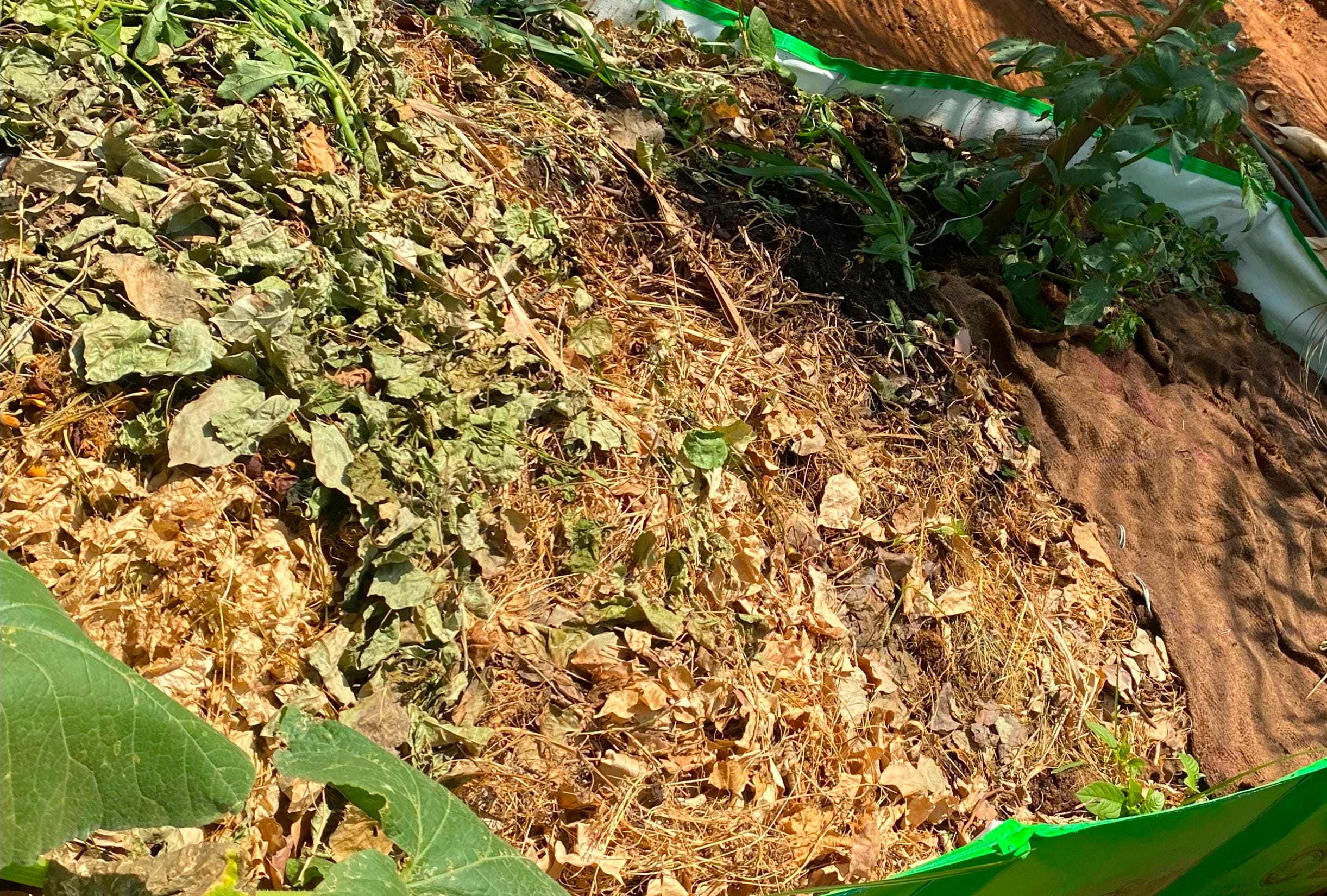
All photographs by Anjou Dargar.
[1] See Sir Albert Howard, An Agricultural Testament (1940), especially chapters 1–3, where he describes learning from Indian farmers and outlines the principles of composting, biodiversity and soil fertility.
[2] Brahma Nand, “Nature and Causes of Famines in Colonial India,” AAS-ICAS Joint Conference, 2011.
[3] Davis, D. R., Epp, M. D., & Riordan, H. D. (2004). Changes in USDA Food Composition Data for 43 Garden Crops, 1950 to 1999. Journal of the American College of Nutrition.
[4] Davis, D. R. (2017). Declining fruit and vegetable nutrient composition: What is the evidence? Horticultural Science.
[5] Sender, R., Fuchs, S., & Milo, R. (2016). Revised estimates for the number of human and bacteria cells in the body. PLOS Biology.
[6] Blaser, M. J. (2016). Missing Microbes: How the Overuse of Antibiotics Is Fueling Our Modern Plagues.
[7] Yurkovetskiy L, Burrows M, Khan AA, et al. Gender bias in autoimmunity is influenced by microbiota. Immunity. 2013 Dec. Demonstrates gut microbiota’s role in autoimmune disease development.
[8] Jiang H, Ling Z, Zhang Y, et al. Altered fecal microbiota composition in patients with major depressive disorder. Brain Behav Immun. 2015 Aug. Correlates altered microbiota with depression symptoms.
[9] Ley RE, Turnbaugh PJ, Klein S, Gordon JI. Microbial ecology: human gut microbes associated with obesity. Nature. 2006 Dec 21. Links gut microbiota composition with obesity and metabolic health.
[10] Frank, D. N. et al. (2007). Molecular-phylogenetic characterization of microbial community imbalances in human inflammatory bowel diseases. PNAS.
[11] Penders, J. et al. (2013). Antibiotic use and risk of allergic disease: A systematic review and meta-analysis. Pediatrics.
[12] Global Burden of Disease Cancer Collaboration, 2023.
[13] CDC National Center for Health Statistics, 2023.
[14] Smith, A. H., et al. (2016); Alavanja, M. C. R., et al. (2004). Studies on pesticide exposure and cancer.
[15] Scheperjans, F. et al. (2015). Gut microbiota are related to Parkinson's disease and clinical phenotype. Movement Disorders.
[16] Idiocracy (2006), directed by Mike Judge, is a satirical film that imagines a dystopian future where society has become anti-intellectual, nutritionally bankrupt and entirely disconnected from nature. Among its more absurd moments: crops are watered with a sports drink because it has electrolytes. The film has become shorthand for what happens when convenience, consumerism and short-term thinking override common sense.
[17] Multiple studies; see literature by Regeneration International and Rodale Institute for aggregate outcomes.